


Busy as a bee in the garden of the Acropolis Museum
May has arrived, and the myrtle trees in the garden of the Acropolis Museum have dressed in their finest! Adorned with their white blossoms, they welcome the bees, who work tirelessly to gather pollen and make their delicious honey. Did you know that pollen sticks to their legs and is carried from flower to flower? This is how plants produce new fruits and seeds. Without bees, we would not have an abundance of apples, cherries, strawberries, and so many other fruits. It is no coincidence that people have considered bees precious since ancient times! The ancient Greeks even said that when Zeus was a baby and was being cared for by the Nymphs in a cave on Crete, they fed him milk from the goat Amalthea and honey from the bees. They regarded honey as a divine food that gave them strength! Since they did not have sugar, they made sweets with honey: honey cakes, small pyramids made of honey and sesame seeds, and many more treats. One of their favorite sweet delicacies was the honeycomb itself, which they ate during great festivals such as the Panathenaea. Similar honeycombs are carried on trays by the young tray-bearers depicted on the frieze of the Parthenon. After all, Attica was said to produce excellent honey, and for that reason archaeologists have discovered beehives even in the ancient neighborhood beneath the Acropolis Museum.
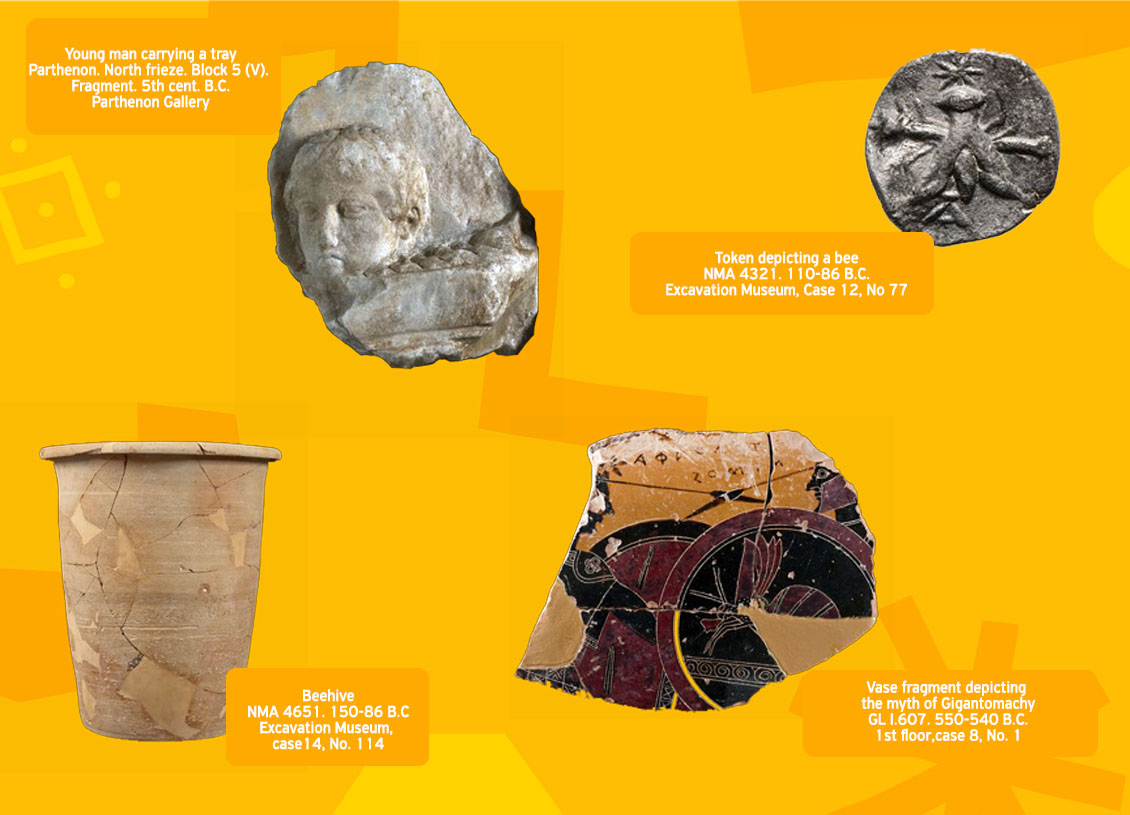
That’s all for today ΑΜΚ (AcropolisMuseum Kids) folks! Stay tuned for more exciting news. We hope to see you soon!


 TRY AGAIN

 Continue


